

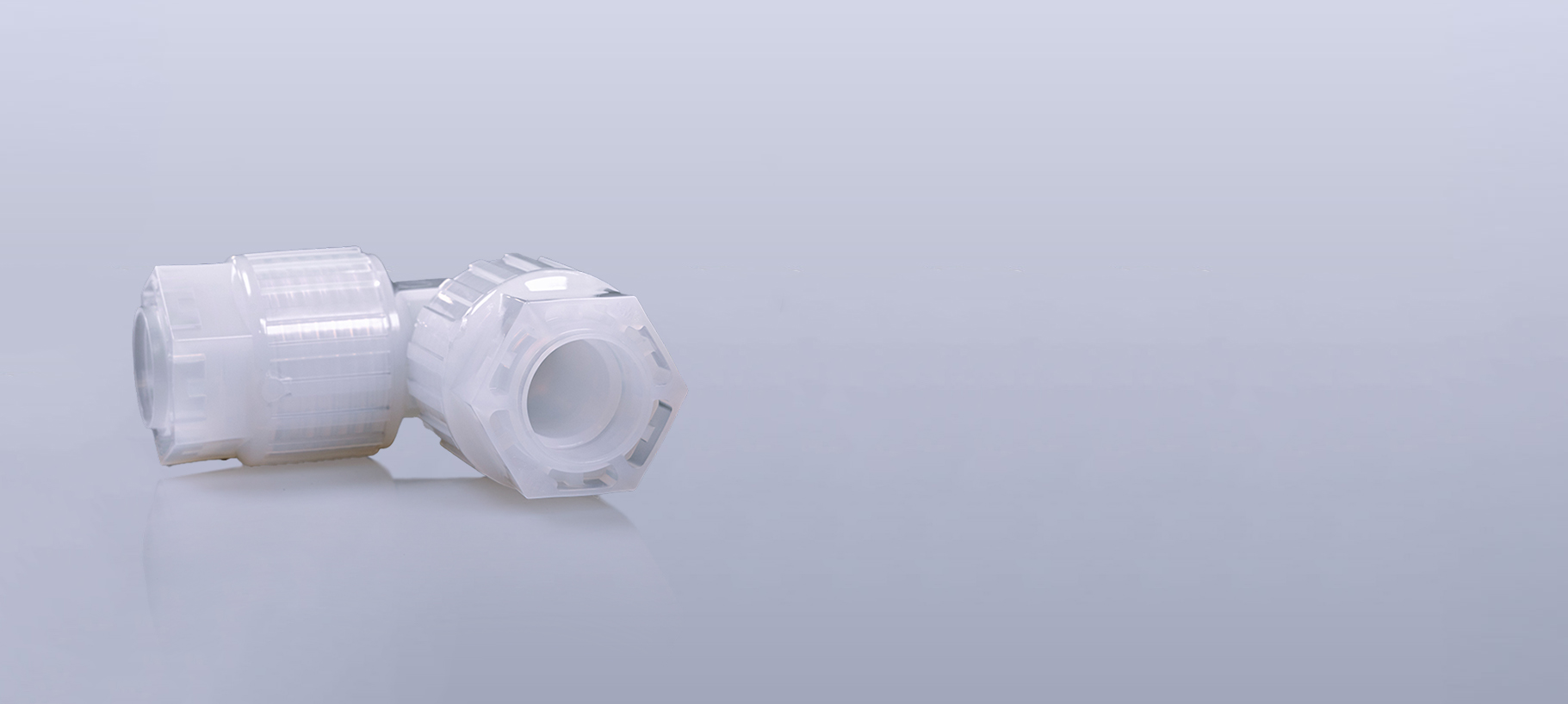
ETFE coating: protection against chemicals and mechanical wear in the process industry
A PTFE coating protects your components against virtually any aggressive medium, but doesn't hold up once impacts, abrasion or mechanical loading come into play. In the process industry, this is precisely where many coatings fail prematurely: not through chemical attack, but through damage to the coating surface itself. Anyone looking for a coating that is both chemically resistant and mechanically robust soon arrives at ETFE. In this article you'll read why ETFE coating is increasingly chosen as an alternative to PTFE in the process industry, and when it's the right choice for your application.
The problem: coatings that perform well chemically but fall short mechanically
PTFE coating is regarded as the standard for chemical protection: virtually inert, broadly applicable and proven in the process industry for decades. Yet engineers and maintenance teams see a recurring problem: PTFE coatings are relatively soft and prone to mechanical damage. Abrasion from medium flow, contact with tools during maintenance, or vibration in the installation lead to scratches, flaking or localised wear spots.
Once the coating is locally damaged, the underlying material loses its protection, creating a risk of corrosion, leakage or process contamination. In sectors such as petrochemicals, pharmaceuticals and machine and equipment manufacturing, this means unnecessary downtime and repair costs that can be avoided with the right material choice.
Analysis: why this problem is structural
The cause lies in the molecular structure of PTFE. The material owes its chemical resistance to the strong carbon-fluorine bond, but due to its crystalline structure it lacks the mechanical stiffness needed to absorb impact and abrasion. Engineers often choose PTFE coating purely on the basis of chemical compatibility, without fully weighing the mechanical load of the application. That's the bottleneck: a coating is assessed on a single property, while in practice multiple forms of loading occur simultaneously.
Maintain chemical protection
ETFE (ethylene tetrafluoroethylene) is a copolymer of ethylene and tetrafluoroethylene, combining much of PTFE's chemical resistance with significantly higher mechanical strength. Where PTFE forms a relatively soft, wear-sensitive top layer, an ETFE coating is stiffer, tougher and more resistant to impact, tearing and abrasive wear — without compromising the chemical protection the process industry needs.
The solution: ETFE coating as a mechanically resilient alternative
Where the application involves mechanical loading alongside chemical resistance — think of agitators, conveyor systems, piping with particle flow, or components that are regularly dismantled for maintenance — an ETFE coating offers a direct solution. The coating retains its protective effect for longer, even under conditions where a PTFE coating already shows visible wear.
This is not a theoretical advantage: it translates into fewer repairs, longer maintenance intervals and a lower chance of unexpected failure due to localised coating damage. It's important to note that ETFE coating doesn't fully replace PTFE in every case — at extreme chemical loads or temperatures up to 260°C, PTFE remains the first choice in some applications. The trade-off comes down to the question: which load weighs more heavily in your process — chemical or mechanical?
Step-by-step plan: how to determine whether ETFE coating suits your application
Step 1: Map out medium exposure
Determine which chemicals, concentrations and temperatures the coated component will come into contact with.
Step 2: Assess the mechanical load
Look at abrasion, vibration, impact and the frequency of disassembly and reassembly during maintenance.
Step 3: Weigh chemical against mechanical risk
Determine which risk carries the greatest cost impact in your process: chemical attack or mechanical wear.
Step 4: Request the coating specification
Have layer thickness, adhesion and suitable substrate assessed by a specialist, tailored to your component geometry.
Step 5: Test under representative conditions
Preferably validate the coating first on a test component under practical conditions before scaling up to the full production line.
Practical example
In the petrochemical industry, agitator components are regularly coated with PTFE to protect them against aggressive process media. In installations where these components are also exposed to particle flow and frequent mechanical loading, an ETFE coating proves in practice to last longer: the coating shows less localised wear, allowing maintenance intervals to be extended without compromising chemical protection.
Frequently asked questions
What is the key difference between ETFE coating and PTFE coating?
PTFE coating offers the broadest chemical resistance and the highest temperature range, but is mechanically relatively soft. ETFE coating combines much of that chemical protection with significantly higher impact and tear resistance, making it more suitable under mechanical loading.
For which applications is ETFE coating a better choice than PTFE?
For components that face abrasion, vibration, impact or frequent disassembly during maintenance alongside chemical exposure, ETFE coating generally outperforms PTFE because the coating is less prone to localised damage.
Up to what temperature is ETFE coating resistant?
ETFE can be used across a wide temperature range, but has a lower maximum than PTFE. For applications with very high process temperatures, PTFE coating remains the preferred choice in many cases.
Can ETFE coating be applied to existing metal components?
Yes, ETFE coating is widely applied to metal components in the process industry, provided the substrate, geometry and layer thickness have been assessed in advance for the specific application.
How do I determine whether my process is at greater risk of chemical or mechanical damage?
First map out medium exposure, then assess the mechanical load, such as abrasion and vibration. Our specialists can make this assessment together with you, based on your process conditions.
Conclusion
PTFE coating remains the benchmark for purely chemical protection, but falls short once mechanical loading comes into play. ETFE coating offers a stronger alternative in these situations: comparable chemical resistance combined with significantly higher impact and tear resistance. The right choice depends on the balance between chemical and mechanical loading in your specific process. By mapping this out carefully in advance, you prevent premature coating damage and unnecessary downtime.
Not sure whether ETFE coating suits your application better than PTFE? Get in touch with our specialists. They're happy to think along with you and advise based on your specific medium, load, and process conditions.